Same-Day ShippingQuality Guaranteed

Bearings

Bearings are critical mechanical components used to enable rotational or linear movement while reducing friction between moving parts in industrial machinery and equipment. This category includes deep groove ball bearings, oil seals, and rotary shaft seals designed for various...
2 products
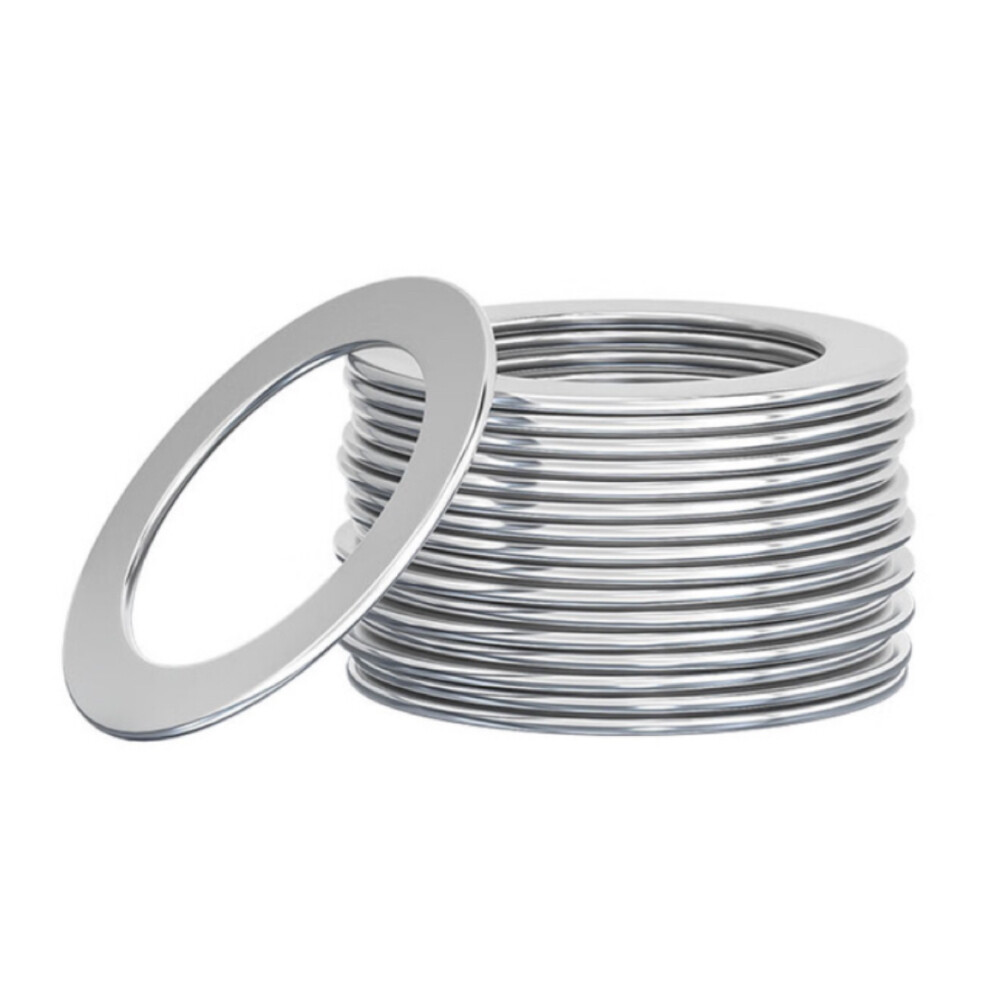
Bearing Steel Oil Seal, Low Noise, Corrosion Resistant, Rotary Shaft Seal
Unbranded|SKU: 10173126006229
Bearing Steel Oil Seal, Low Noise, Corrosion Resistant, Rotary Shaft Seal

Made from 304 stainless steel for superior corrosion and oxidation resistance. Ultra-thin design (0.5 mm / 0.02 in) ideal for precision spacing applications. Provides even load distribution and protects fastening surfaces. High dimensional accuracy ensures consistent fit and performance. Suitable for machinery, instruments, and precision assembly.

$2.08 /eachIn Stock
Get Quote
Honeywell|SKU: MRO-PT-001
Deep Groove Ball Bearing, 6205-2RS

Sealed deep groove ball bearing, 6205-2RS. 25mm bore, 52mm OD, 15mm width. Double rubber seal. For electric motors, conveyors, and general machinery.

$6.99 /eachIn Stock
Get Quote

How to Choose the Right Bearings

When selecting industrial bearings, first consider the load type (radial, axial, or combined), load rating requirements, and operating speed. Deep groove ball bearings are versatile for combined loads, while thrust bearings handle primarily axial loads. Calculate the dynamic and static load ratings needed based on your application's requirements. Operating temperature range and environmental conditions will determine whether standard steel or corrosion-resistant materials are necessary.

Bearing seals and lubrication requirements are critical selection factors. The 2RS designation indicates rubber seals on both sides, offering better protection against contamination compared to open bearings. Consider maintenance requirements - sealed bearings are pre-lubricated and ideal for locations with limited maintenance access. For high-speed applications, noise ratings and precision grades become important specifications to evaluate.

Installation and mounting requirements influence bearing selection. Verify shaft and housing tolerances, fit requirements (loose, transition, or interference), and installation method (press-fit, slip-fit, or heat mounting). All bearings should comply with ISO 492 tolerance standards for industrial applications. For critical equipment, consider vibration monitoring compatibility and predictive maintenance requirements.

Frequently Asked Questions

How do I determine the correct bearing size and type for my application?
Start by measuring the shaft diameter, housing bore, and width requirements. Consider the load direction (radial, axial, or combined) and calculate the required load ratings. Check operating speed, temperature range, and environmental conditions. Consult the manufacturer's catalog for specific load ratings and speed limits.
What are the main differences between sealed and open bearings?
Sealed bearings (designated with 2RS or ZZ) come pre-lubricated and protected against contamination, ideal for dirty environments or limited maintenance access. Open bearings allow for custom lubrication and higher speeds but require regular maintenance and clean operating conditions. Sealed bearings typically have slightly lower maximum speed ratings than open bearings.
What do the bearing precision grades mean?
Bearing precision grades (P0, P6, P5, P4, etc.) indicate manufacturing tolerances according to ISO standards. P0 is normal tolerance for general applications, while P6 and higher grades offer increased precision for high-speed or high-accuracy requirements. Higher precision grades typically cost more and may have longer lead times.
What is the typical lead time and minimum order quantity for bearings?
Standard size bearings usually ship within 1-3 business days with minimum order quantities of 1-5 pieces. Special or precision bearings may require 1-2 weeks lead time with higher MOQs. Volume pricing discounts typically start at 10+ pieces, with significant savings at 50+ piece quantities.
Can I replace a ball bearing with a roller bearing?
Replacing bearing types requires careful engineering review. While possible in some cases, differences in load capacity, speed ratings, and mounting requirements must be considered. Ball bearings generally handle higher speeds but lower loads compared to roller bearings. Always verify dimensional compatibility and operating parameters before substitution.